


Rowing at College
Read to learn more about NCAA Rowing and if this could be the right path for you!
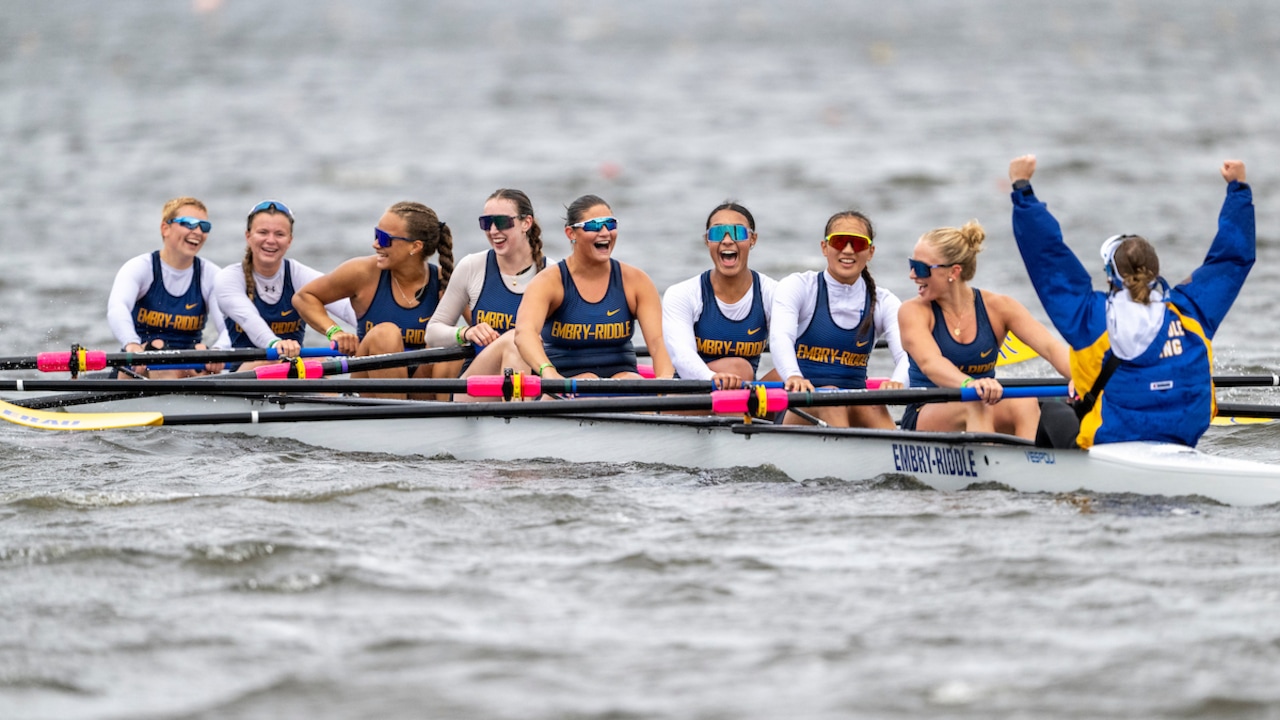
College Rowing in the USA!
Rowing is one of the most established collegiate sports in the USA, offering excellent opportunities for student-athletes to combine academics with high-performance sport. With a clear, measurable recruitment process and a large number of programs, rowing provides a strong pathway into the US college system.
Complete our Rowing CV for more personalised feedback on your potential pathway within the U.S. university system.
How many colleges offer Rowing and what does a scholarship look like?
Rowing is offered across several collegiate systems in the USA, although the structure differs between men’s and women’s programmes.
Women’s Rowing:
- 150 – 160 NCAA varsity programmes
- 85+ NCAA Division I programmes
Women’s rowing is an NCAA-sponsored sport and continues to grow, largely driven by Title IX participation requirements.
Men’s Rowing:
Men’s college rowing continues to grow; however, it is not an NCAA-sanctioned sport, and programmes are instead governed by different organisations, with the majority of varsity teams competing under the Intercollegiate Rowing Association (IRA).
- 84 Varsity Programmes
- 39 Division 1 colleges with rowing teams, the majority of which compete in the Intercollegiate Rowing Association (IRA) and follow most NCAA recruiting rules.
Scholarships:
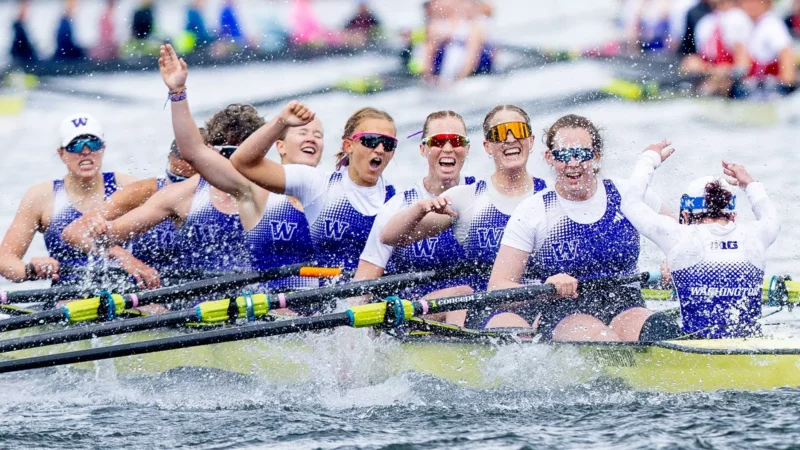
UW Women’s Team
Women’s rowing offers some of the strongest scholarship opportunities in U.S. college sport, particularly at NCAA Division I level.
- Division I: Up to 68 scholarship equivalents per team (from 2025–26), typically split across large squads of ~55–60 athletes
- Division II: Up to 20 scholarship equivalents per team, with smaller squad sizes (~25–30 athletes)
- Division III: No athletic scholarships available
While full scholarships are possible, most athletes receive partial athletic awards, which are often combined with academic and need-based financial aid. Ivy League programmes do not offer athletic scholarships but can provide generous need-based aid.
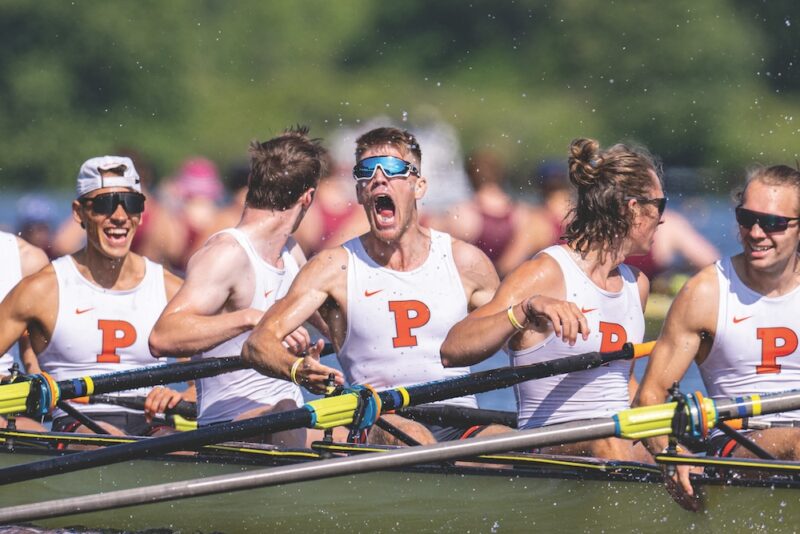
Princeton Men’s Team
Athletic scholarship opportunities in men’s rowing are more limited compared to the women’s side. Many programmes are based at Division III and Ivy League institutions, which do not offer athletic scholarships, and a number of top rowing universities are highly academic, where funding is typically focused on academic and need-based aid.
Some leading Division I programmes do offer partial athletic support; however, these tend to be highly competitive environments with very high athletic standards. As a result, scholarship opportunities at this level are typically reserved for top-performing athletes.
That said, rowing still provides a strong pathway into top universities. Coaches can often support athletes through the admissions process and help them access academic scholarships and need-based funding. For many athletes, the value of rowing lies in gaining entry to high-quality academic institutions and building a well-rounded financial package, rather than relying solely on athletic scholarship funding.
Recruitment Standards: ERG
WOMEN’S ROWING: 2K ERG HEAVYWEIGHT BENCHMARKS
- Tier 1: Low 7:20s and under
- Tier 2: Mid 7:20s to 7:30
- Tier 3: 7:30 to 7:50
- Tier 4: 7:50 to 7:55
MEN’S ROWING: 2K ERG HEAVYWEIGHT BENCHMARKS
- Tier 1: 6:10 and under
- Tier 2: 6:10 to mid 6:20s
- Tier 3: Mid 6:20s to 6:40
- Tier 4: 6:30 to 6:40
IMPORTANT CONTEXT:
- 2k ERG scores are the primary evaluation tool for coaches, followed closely by academic performance
- These times represent recruiting benchmarks, not final college performance- athletes are expected to improve once in a collegiate programme
- Physical profile (particularly height) can be a factor, but erg performance and academics remain the priority
- Coaches also place strong emphasis on attitude, work ethic, and character
Ultimately, finding the right fit athletically, academically, and financially is key when navigating the college rowing pathway.
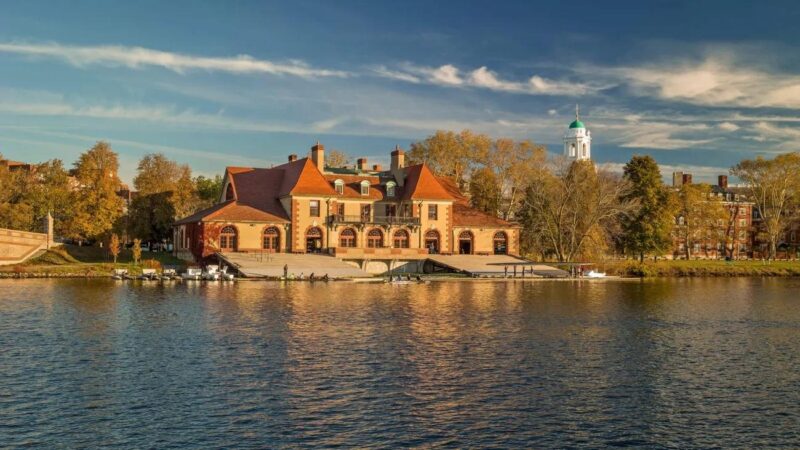
The Weld Boathouse- home to the women’s rowing team at Harvard.
When does the Rowing Season take place?
Rowing is primarily a spring sport in the US college system:
- Fall: Training phase and head races
- Winter: Indoor training and erg development
- Spring (main season): March – May
- Championships: May / early June
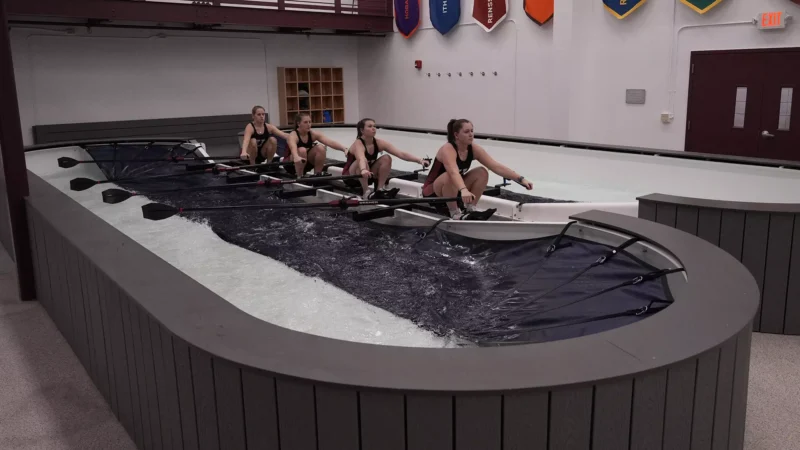
Indoor Training Facility – Union College
Next Steps:
If you’re a rower interested in exploring college opportunities in the USA, we’d love to hear from you!
Complete our Rowing CV below for us to better understand your current level and how it aligns with opportunities across the US system. We will then be in touch with further feedback!